Blog
/
Amazon DSP Black Friday 2026: Rescore Last Year
Amazon DSP Black Friday 2026: Rescore Last Year
Kajal Sharma
Quick answer: The fastest way to plan Amazon DSP for Black Friday and Cyber Monday (BFCM) is to rescore your Q4 2025 flights before you commit this year’s budget. Pull each flight, put its last touch ROAS next to its multi touch ROAS, compare both with a break even ROAS that uses your deal price, and sort every flight into scale, test or cut. A flight that clears break even under every model deserves more money. A flight that clears it under only one needs a holdout test. A flight that fails under all of them should be reworked. Do this now, because Black Friday is November 27, 2026 and attributed sales take about three weeks to settle.
Last updated October 23, 2026. Amazon renamed Amazon DSP on September 29, 2026, but says existing campaigns and performance history carry forward. We use “Amazon DSP” here because that is still how most advertisers and reports refer to it.
Key Takeaways
You have about five weeks. Black Friday is November 27 and Cyber Monday is November 30, 2026. Prime Big Deal Days on October 6 and 7 already gave you a live rehearsal, and its data settles around October 28.
Last year’s numbers used a different rulebook. Amazon changed view attribution on January 1, 2026. Q4 2025 flights ran under the old 14 day view model, so compare like with like before you judge them.
Use more than one model. Amazon’s multi touch attribution divides credit by each ad’s likely contribution, not equally. Score each flight under every model you can see, and trust a flight most when the models agree.
Deal prices raise your break even ROAS. A $30 product at a 25% margin breaks even at a ROAS of 4.0. At 10% off it needs 6.0, and at 20% off it needs 16.0.
Judge BFCM by leading indicators during the event, and by settled ROAS in mid December.
Key Dates for Amazon DSP in Q4 2026
Date | What it means for DSP |
|---|---|
October 6 to 7 | Prime Big Deal Days ran in 22 countries. Your rehearsal data is still maturing. |
About October 28 | Big Deal Days data should be close to settled: a 14 day lookback plus up to 7 days of deductions. |
November 27 | Black Friday. |
November 30 | Cyber Monday. |
About December 21 | BFCM data should be close to settled, 21 days after Cyber Monday. |
The settlement dates come from the attribution rules in our Amazon DSP attribution guide: sales are reported on the date of the ad interaction, and a report date is only truly settled about three weeks later. That means any ROAS you read during BFCM week will be understated, and you should not cut a flight based on it.
Why Last Year’s Data Is Still Usable
Amazon’s own DSP page says campaigns, audiences, reporting, settings, creatives, deals and performance history carry forward after the rename. So the Q4 2025 flights you ran are still in your account, and you can rescore them. For the full naming changes, see our guide to DVA, DVA+ and Full Funnel Campaigns.
There is one catch, and it is the first thing to check. Amazon changed view attribution on January 1, 2026 for DSP ads served in the Store and for vCPM Sponsored Brands and Sponsored Display. The new model credits views through shopping signals and a shorter window. Click attribution and other inventory types did not change. Amazon keeps the old rules available as Purchases (all views).
So your Q4 2025 flights were scored under the old view rules, and Q4 2026 will be scored under the new ones. If you compare 2026 standard purchases with 2025 standard purchases, you may blame a flight for a measurement change. Use Purchases (all views) for the comparison, as our attribution guide explains.
How to Rescore Last Year’s Flights: A Five Step Method
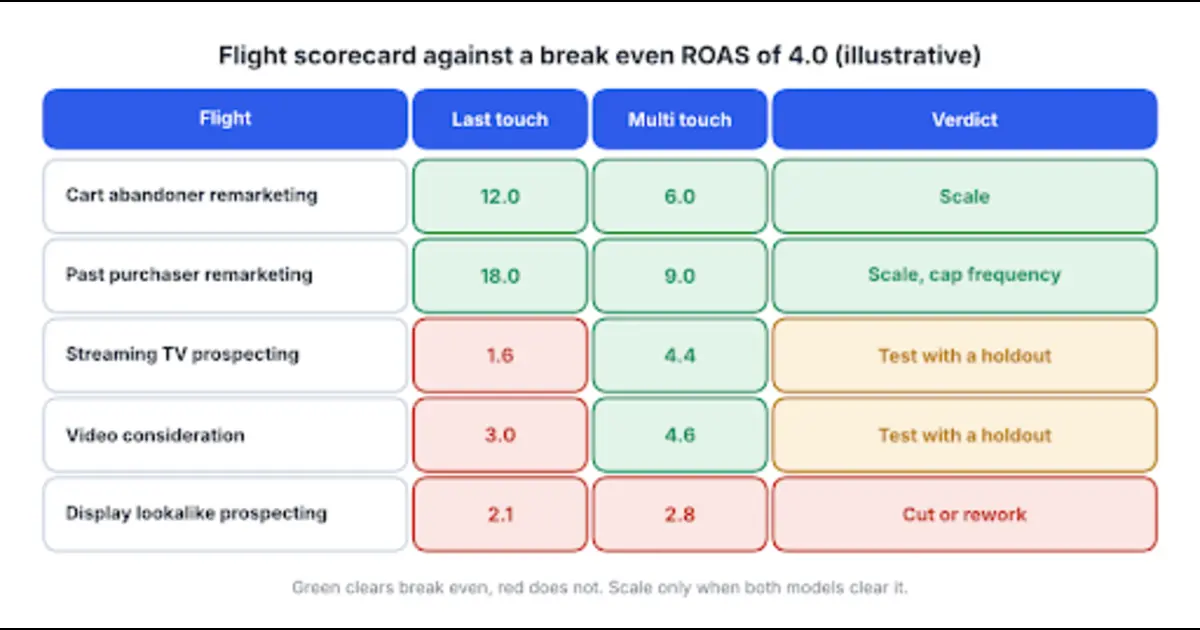
Figure 1: An illustrative flight scorecard against a break even ROAS of 4.0.
Step 1: Pull each Q4 2025 flight with settled data. One row per order or flight, covering October through December 2025. Settled data is stable, so you can trust it.
Step 2: Add the columns that explain the number. For each flight, record spend, last touch ROAS, view share, brand halo share and new to brand share. Our attribution guide gives the formulas for each.
Step 3: Add a second model. If you can see Amazon’s multi touch metrics, add multi touch ROAS next to last touch. Amazon describes multi touch attribution as dividing credit by each ad’s likely contribution, using experiments, machine learning and shopping signals, and it shows the metrics next to their last touch counterparts. The same page describes it as a US beta, so check whether your account has it. If it does not, use the credit shift check at the end of this step.
Step 4: Compare each flight with break even ROAS. Use your contribution margin before ads: break even ROAS = 1 ÷ margin. Use the deal price margin for event flights, which the next section covers.
Step 5: Sort by agreement across models. This is the rule that makes the exercise useful.
Result | Verdict | What to do |
|---|---|---|
Clears break even under every model | Scale | Raise budget, and cap frequency so you do not overspend on the same shoppers |
Clears break even under only one model | Test | Run a holdout before adding budget |
Fails under every model | Cut or rework | Fix audience, creative or offer, or move the budg |

Figure 2: The model agreement rule.
Illustrative example. Your product sells for $30 at a 25% margin, so break even ROAS is 1 ÷ 0.25 = 4.0. Five flights from last Q4:
Flight | Last touch ROAS | Multi touch ROAS | Verdict |
|---|---|---|---|
Cart abandoner remarketing | 12.0 | 6.0 | Scale |
Past purchaser remarketing | 18.0 | 9.0 | Scale, with a frequency cap |
Streaming TV prospecting | 1.6 | 4.4 | Test |
Video consideration | 3.0 | 4.6 | Test |
Display lookalike prospecting | 2.1 | 2.8 | Cut or rework |
Notice what each model does. Last touch favors the remarketing flights, which catch shoppers at the end. Multi-touch moves credit toward the upper funnel flights. Neither is the truth. The flights that survive both are the safest to scale.
A note on equal credit models
Some advertisers want to see the same flights with credit split equally across touches. Amazon’s multi touch metrics are weighted, not equal, so an equal credit view is not a console setting we can point to. If you want one, you would build it in Amazon Marketing Cloud, where you can write your own attribution logic. Treat it as a stress test, not a verdict. Equal credit can overpay every touchpoint, including ones that did nothing.
If you cannot see multi touch metrics
Use the credit shift check instead: compare each flight’s last touch ROAS with its ROAS under Purchases (all views), and look at view share. A flight with a very high view share and a very high last touch ROAS, such as a remarketing flight on past purchasers, probably overstates its effect. Treat it as a candidate for a holdout.
Reset Break Even ROAS for Deal Prices
Your normal break even ROAS is not your event break even ROAS. A discount cuts your margin, which raises the ROAS you need.
Event margin = (Deal price minus Cost per unit) ÷ Deal price
Break even ROAS = 1 ÷ Event margin
Worked example (illustrative). A $30 product costs you $22.50 all in, so margin is $7.50, or 25%.
At full price: break even ROAS = 1 ÷ 0.25 = 4.0.
At 10% off, the price is $27 and margin is $4.50, or 16.7%. Break even ROAS = 6.0.
At 20% off, the price is $24 and margin is $1.50, or 6.25%. Break even ROAS = 16.0.
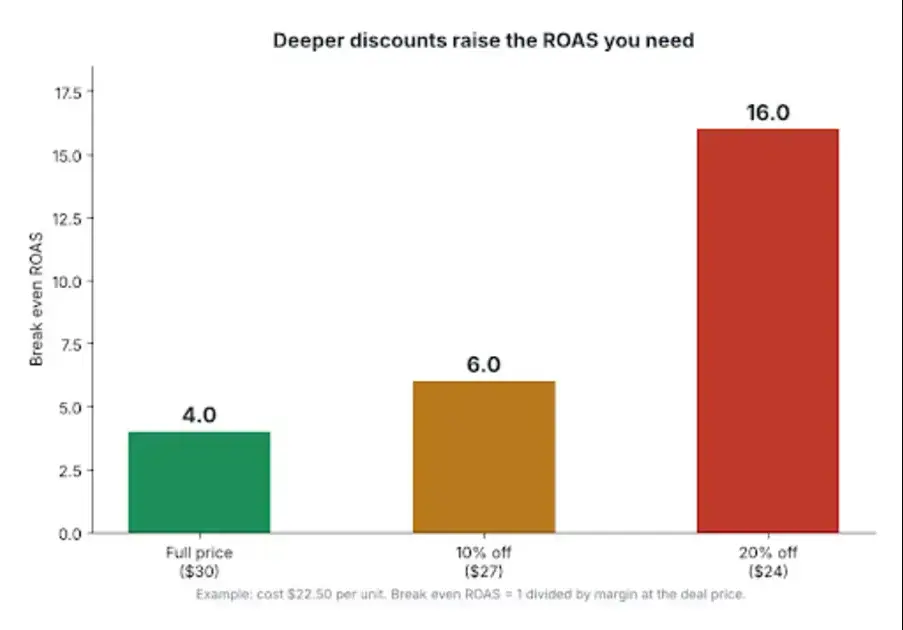
Figure 3: Deeper discounts move the bar sharply.
This is why many BFCM DSP flights look bad on first order ROAS even when the campaign is doing its job. Two things follow:
Set a different goal for deep discount ASINs. For a product at 20% off, the realistic goal is new customers and repeat orders, not first order profit. Our DVA guide’s repeat purchase test for Full Funnel Campaigns shows how to estimate the repeat value you need.
Reconcile attributed sales with your net revenue. Amazon’s attribution documentation says attributed sales use the cart unit price, and many cart level discounts such as coupons and some event pricing are not subtracted, so reported sales can run above net revenue. Compare the report with your own numbers before you scale.
If you are a vendor, your margin is lower still, because you earn the wholesale price. Our guide to Amazon DSP for vendors shows the vendor version of this math.
A Week-by-Week Plan from Now to Cyber Monda

Figure 4: From today to settled BFCM data.
Week | What to do |
|---|---|
Now to October 28 | Rescore last Q4’s flights. Pull Prime Big Deal Days data but do not judge it until it settles. |
October 28 to November 3 | Run the same scorecard on Big Deal Days flights. Compare against your Q4 2025 results using Purchases (all views). |
November 4 to 10 | Set budgets by verdict. Scale the flights that clear every model, and plan holdouts for the rest. |
November 11 to 17 | Check creative, audiences and tracked ASINs. Any ASIN missing from the tracked list can only appear as halo. |
November 18 to 24 | Set frequency caps per audience, check stock cover and finalize pacing. |
November 25 to December 1 | Run the event. Watch leading indicators, not ROAS. |
December 2 to 20 | Let the data settle. Do not cut flights on early ROAS. |
About December 21 | Score BFCM the same way and save it for next year. |
Two checks in that plan deserve a closer look.
Stock cover. DSP lifts demand, and during BFCM you may not be able to restock. Set each flight length from your weeks of cover at the lifted demand, not at baseline. Our Black Friday listing optimization guide covers the listing side of peak readiness.
Frequency and overlap. DSP competes with your Sponsored Ads for the same sale, and Amazon credits each conversion once. Heavy remarketing during BFCM can double count effort on shoppers who were going to buy anyway. Cap frequency per audience and exclude recent purchasers.
What to Watch During the Event
ROAS is the wrong tool on the day, because the sales are still arriving. Track these instead:
Delivery and pacing: is each order spending to plan, and are any capped by budget early?
Detail page views and add to carts: leading signals that settle faster than purchases.
New to brand share: are acquisition flights reaching people who have not bought from you in the previous 365 days?
Stock cover: is any advertised ASIN about to run short?
Buy Box status: a lost Buy Box means ad clicks and views that cannot convert. That same documentation notes that sales by other sellers can be credited to your ads, so a reseller holding the Buy Box can distort the report.
Should You Try DVA+ or Full Funnel Campaigns Before BFCM?
Probably not as your main plan. DVA+ is in extended closed beta in the US, with open beta expected in late October and general availability targeted for Q1 2027. Full Funnel Campaigns has a $100 minimum daily budget and hands channel and audience choices to Amazon.
Our recommendation, which is a judgment and not an Amazon rule: if you want to test either, size the test so a failure will not hurt your peak plan, and set a holdout first. Peak is a poor time to learn a new product with limited reporting. Our DVA guide covers the trade offs.
How Atom11 Helps With Peak Season DSP
Atom11 is an Amazon Ads Partner platform built on the Amazon Ads API. For BFCM, its value shows up in the jobs that eat the most time in the last five weeks: setting up orders, pacing them, capping frequency, reading DSP and Sponsored Ads together, and catching stock or Buy Box problems before spend leaks. Here is how each one maps to the plan above.
Rescoring flights (steps 1 and 2). The Amazon DSP module reports DSP and Sponsored Ads side by side, with promoted, halo and combined metrics. That puts the columns you need for the scorecard, such as halo share and combined results, in one view instead of several exports.
Building the event quickly. Bulk creation of orders and ad groups saves hours when you are setting up many flights by audience or product before November 27.
Pacing and budget control. Cross order pacing lets several orders share one monthly or event budget, so a strong flight can absorb spend while a weak one slows down, without you moving budgets by hand each day.
Frequency and overlap. Frequency caps per audience help with the over exposure problem we flagged, where remarketing keeps hitting shoppers who were going to buy anyway.
Audiences for holdouts and tests. AMC audience activation gives you a way to build the exposed and holdout groups your Test verdicts depend on. Our Amazon Marketing Cloud for Black Friday guide covers the audience side.
Stock and Buy Box awareness on the Sponsored Ads side. Atom11’s retail aware rules use inventory, price, Buy Box and organic rank alongside ad metrics, so Sponsored Ads spend can slow when stock is short. That matters because DSP and Sponsored Ads compete for the same sale during peak.
Safety nets for big events. Version control lets you save bids and budgets before an event and roll them back afterward, and the Performance Monitor keeps a before and after record for each automation.
Asking questions in plain language. The Atom11 MCP connects Claude, ChatGPT and Cursor to your ad accounts with user level permissions, live reads and writes that need confirmation, and setup takes about five minutes. Neo, Atom11’s AI analyst, compares periods across more than 15 ad and retail signals, which helps when you want to know why a flight moved after the event.
Want a second pair of eyes on your BFCM DSP plan? Book an Atom11 demo.
Conclusion
The best BFCM plan starts with last year’s data, not this year’s budget. Rescore your Q4 2025 flights under more than one model, check that you are comparing the same attribution rulebook, and set break even ROAS from your deal price. Scale the flights that clear every test, hold the ones that clear only one until a holdout settles it, and rework the rest.
Then protect the plan during the event. Do not judge flights on ROAS while the data is still arriving, watch stock and the Buy Box, and score the whole season again when it settles in December. The advertisers who get the most from peak season will be the ones who know, before November 27, which of their flights deserve the money.
FAQs
When is Black Friday 2026, and when is Cyber Monday?
Black Friday is November 27, 2026 and Cyber Monday is November 30, 2026. Amazon’s Prime Big Deal Days ran earlier, on October 6 and 7.
How should I plan Amazon DSP for Black Friday?
Rescore last Q4’s flights across attribution models, set break even ROAS from your deal price, scale only the flights that clear every model, and run holdouts for the rest. Then set frequency caps, check stock cover and plan to judge results after the data settles in December.
Can I use Prime Big Deal Days data to plan for Black Friday?
Yes, as a rehearsal, but wait until it settles. Sales are reported on the ad interaction date, and a report is only settled about three weeks later, which puts Big Deal Days data at around October 28.
Does Amazon DSP have equal touch attribution?
Amazon’s multi touch attribution is weighted by each ad’s likely contribution, not equal. If you want an equal credit view, you would need to build it with your own logic in Amazon Marketing Cloud, and treat it as a stress test.
Why does my Amazon DSP ROAS look low during Black Friday?
Two common reasons. Deal prices cut your margin, so the ROAS you need to break even rises. And attributed sales keep arriving after the day, so early readings are understated. Judge BFCM flights by settled data in mid December.
