Blog
/
Amazon PPC Platform for Agencies: Features That Matter at Scale
Amazon PPC Platform for Agencies: What to Look For
Neha Bhuchar
Managing Amazon PPC for one brand is complex, especially when it involves constant keyword research, campaign optimization, and budget adjustments. Managing PPC ads across ten or twenty client accounts simultaneously is an entirely different operational challenge.
The Amazon PPC platform that works well for a solo seller breaks down fast at agency scale. Reporting takes hours, account switching kills momentum, and the same bid change that works for one client can be wrong for another. Standard Amazon PPC tools are not built for the multi-client environment that agencies operate in every day.
This blog covers what agencies should actually look for in an amazon ppc platform for agencies, the features that separate tools built for scale from those built for individual sellers, and why getting this decision right compounds over time.
The Agency Problem with Standard Amazon PPC Tools
Most Amazon PPC tools are designed with a single seller account in mind. They are built to help one advertiser manage their own advertising campaigns, not to give an agency team visibility across dozens of clients simultaneously. When agencies try to use these tools at scale, the friction compounds quickly. This becomes even more difficult when agencies manage large brands with thousands of SKUs and complex campaign structures.
The core issues are structural: no multi-account overview, manual reporting per client, no audit trail of who changed what across accounts, and automation logic that ignores the retail context of each individual client's catalog. At scale, these are not inconveniences. They are operational ceilings.
The most common pain points agencies encounter with standard Amazon PPC management tools:
Switching between client accounts manually, losing context and time with every switch
Downloading raw performance data from each account and rebuilding it in spreadsheets for client reports
No visibility into which automation rules are working across client campaigns and which are quietly burning budget
Bid strategies that keep spending on low-stock products because the PPC software has no inventory awareness
No way to safely test aggressive strategies without risking permanent damage to a client's campaign structure
Multi-Account Management
For agencies, multi-account management is the baseline requirement from which everything else follows. A platform that forces your team to log in and out of individual client accounts, rebuild context each time, and run separate reporting workflows for each advertiser is not a platform built for agency operations.
What good multi-account management looks like in practice:
A unified dashboard: Portfolio-level visibility across all client accounts without switching contexts. Campaign-level, ASIN-level, and account-level performance visible from a single interface.
Bulk actions: The ability to apply bid rules, budget changes, keyword harvesting, and keyword additions across multiple clients simultaneously, without replicating the same work account by account.
Centralized campaign management: Making adjustments and reviewing performance data across all accounts from one place, so agencies can scale client capacity without scaling headcount.
Access controls: The ability to assign team members to specific accounts with appropriate permissions, giving agencies internal accountability without exposing one client's data to another.
Agencies managing more than five client accounts in separate tools spend a disproportionate amount of time on coordination and data reconciliation rather than on actual Amazon PPC optimization. The right platform eliminates that overhead. A centralized platform also makes it easier to align campaign decisions with each client's specific business goals.
Retail-Aware Automation Across Client Portfolios
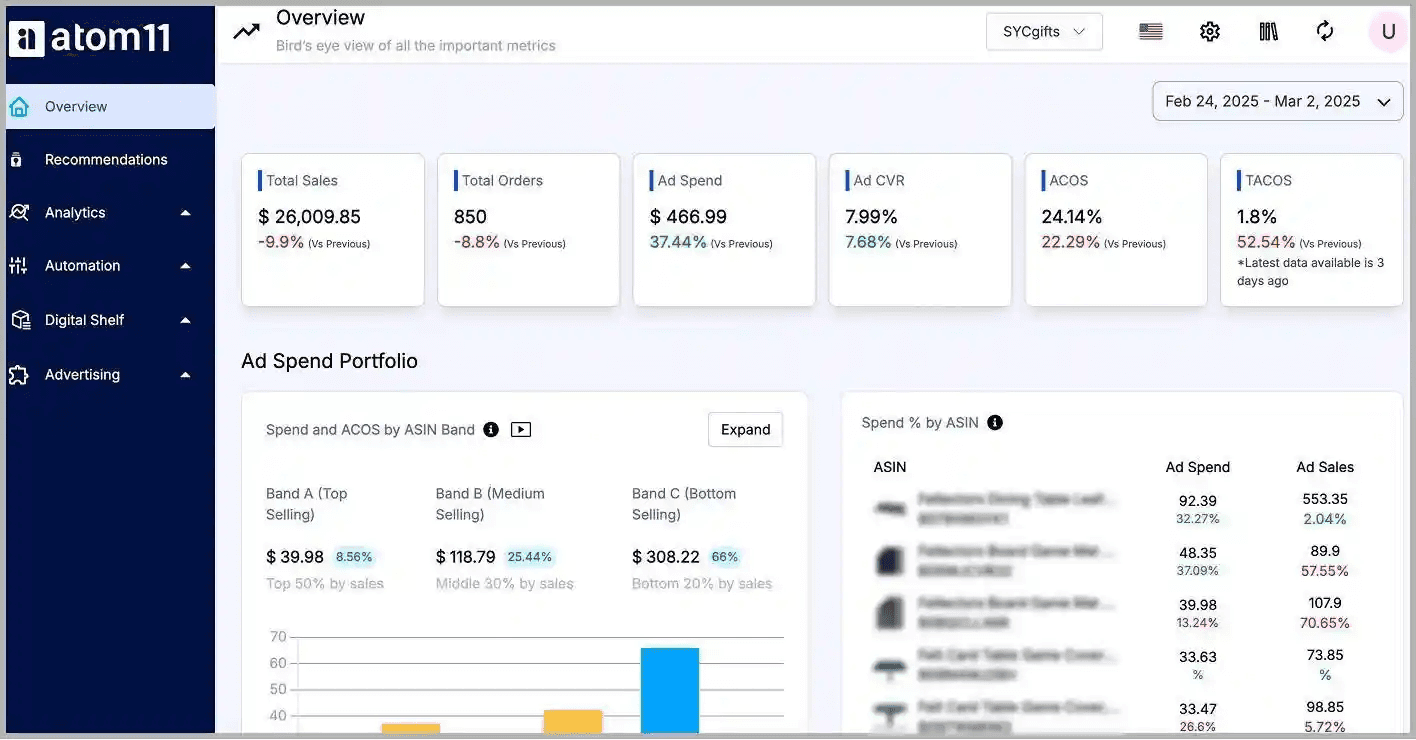
Standard PPC automation software reads ad console data and adjusts bids based on performance thresholds like target ACoS or conversion rate for bid optimization. This works at the individual seller level. At agency scale, it creates a specific and recurring problem: every client account has different inventory patterns, pricing dynamics, and Buy Box situations that a single bid rule cannot account for across all of them simultaneously.
Automation that is retail-blind will keep bidding aggressively on a client's low-stock ASIN, continue spending on a product that has lost the Buy Box, and ignore the organic rank shifts that are changing how efficiently ad spend converts. Across 20 client accounts, these silent errors compound daily. Modern automation increasingly relies on machine learning models that evaluate both advertising and retail signals simultaneously.
What retail-aware automation changes for agencies:
Per-client retail signals: Automations grounded in each client's individual inventory levels, Buy Box status, competitor pricing, and organic rank rather than generic ACoS thresholds applied uniformly.
Dynamic responses to shelf conditions: If a client goes low on stock during a peak period, ad spend is automatically pulled back to protect remaining inventory while other client campaigns continue running normally, with no manual intervention required.
Reduced data aggregation time: When retail and advertising data live in one platform, agencies save the hours otherwise spent pulling from separate tools and reconciling them manually before reporting.
Accurate performance attribution: When a client's sales fluctuate, agencies need to know whether the cause is a bid change, a Buy Box loss, a pricing shift, or a stockout. Retail-aware automation surfaces this context automatically.
Reporting and Analytics
Client reporting is one of the most time-intensive parts of running an Amazon PPC management operation at agency scale. Most standard Amazon PPC tools produce raw campaign data that agencies export, reformat, and rebuild into client-facing reports manually. For agencies managing 10 or more clients, this process can consume a significant portion of the team's weekly capacity. Agencies also need visibility into how keyword targeting decisions influence campaign performance across different accounts.
The reporting and advertising analytics capabilities that separate a professional Amazon PPC platform for agencies from a seller tool:
Custom client-ready dashboards: Built with drag-and-drop reporting rather than raw data exports. Clients should be able to see what matters without the agency having to manually rebuild it every week.
Multi-level views: Daily, weekly, and monthly performance data at campaign, ASIN, and account level, with advertising cost of sale, ad spend, and performance trends all in one place.
Before and after compare mode: The ability to tie every performance shift directly back to the specific automation change or bid adjustment that caused it, making client conversations precise rather than speculative.
Root cause analysis: When a client's sales fluctuate, advanced analytics that diagnose the cause across ads, inventory, pricing, and digital shelf signals, routing the fix to the right place in plain English without requiring SQL expertise.
Agencies that can answer a client's 'why did performance drop this week?' question in minutes rather than hours have a meaningful competitive advantage in client retention and operational efficiency.
Version Control
Version control matters more for agencies than it does for individual sellers. A solo seller making a wrong bid change affects one account. An agency team member making the same error across multiple clients without a rollback path creates problems that are difficult to explain and time-consuming to fix.
What version control looks like in a professional Amazon PPC platform for agencies:
Campaign snapshots: Exact saves of campaign settings, bids, budgets, and placement modifiers before any major change or event. Not just a log of what changed, but a restorable state.
One-click rollback: If an aggressive strategy tested around a client's product launch or peak period does not deliver the expected results, the account can be returned to the exact previous state immediately.
Audit trail: A record of every planned change, who made it, and when it ran, giving agency teams internal accountability and clients the transparency that builds long-term trust.
Safe seasonal testing: The ability to run aggressive bid strategies during Prime Day or a major promotional period for a client without the risk of permanently altering their campaign structure if the strategy underperforms.
Dayparting at Scale
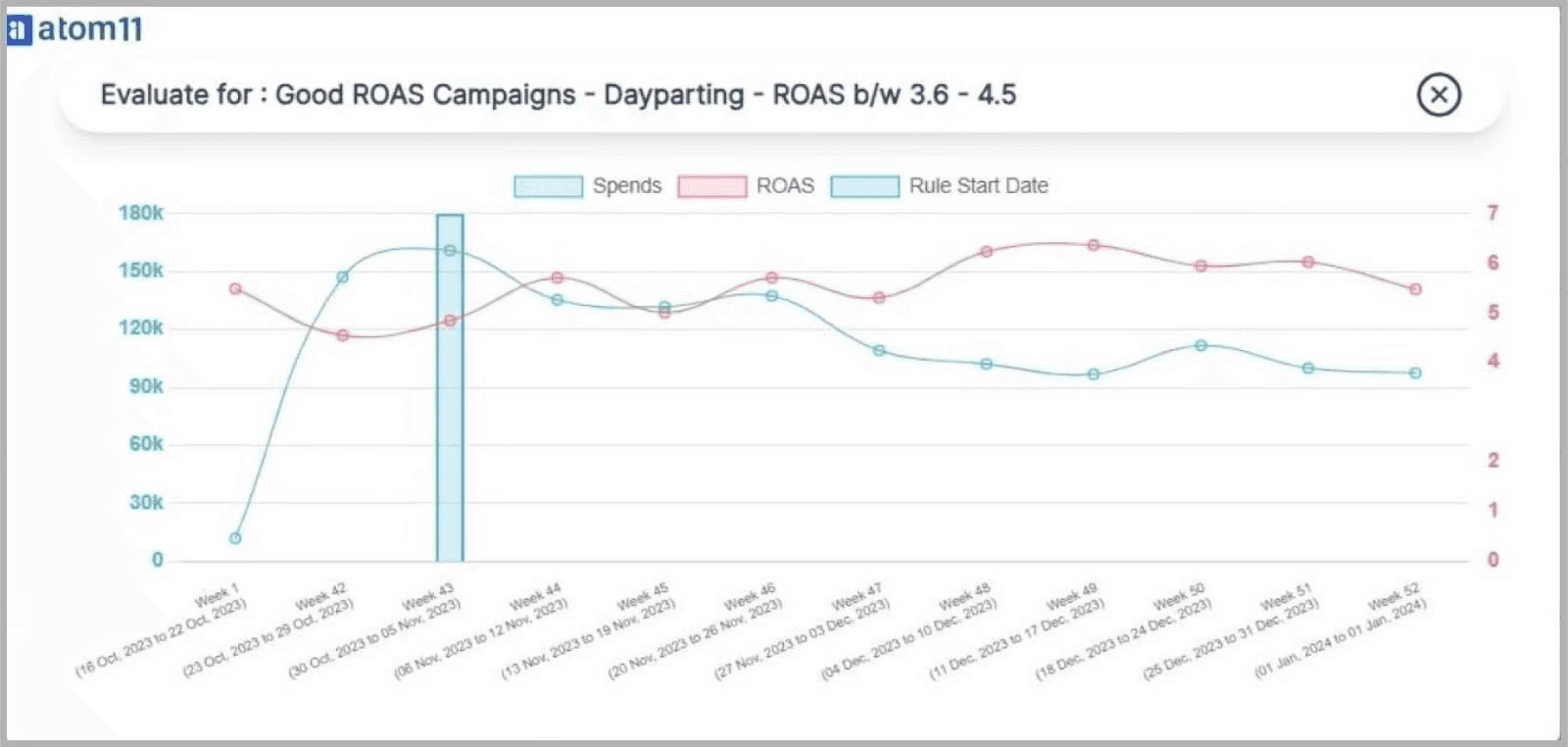
Dayparting is standard in most Amazon PPC tools. What separates an agency-grade implementation from a basic one is whether the platform can apply different schedules per client account and whether those schedules are built from actual hourly performance data rather than assumptions.
Not all client categories have the same peak conversion hours. A client selling home office products converts differently across the day than a client selling supplements or seasonal gifts. Applying one-size-fits-all dayparting schedules across all client accounts wastes budget for those whose buying patterns do not match the default. Proper scheduling also helps maintain product visibility during the hours when shoppers are most likely to convert.
What effective dayparting looks like at agency scale:
Per-account schedules: Custom dayparting rules built from each client's own hourly performance data, not a universal template applied across the portfolio.
Amazon Marketing Stream integration: Near real-time hourly data that reveals peak conversion windows and dead hours by campaign, ASIN, and keyword, not just account-level averages.
Bid and budget control: The ability to adjust both bids and budgets by time block, not just one or the other, giving agencies precise intraday control over how client ad spend is distributed.
Retail-signal layering: Dayparting rules that can respond to a client's Buy Box status, inventory level, or organic rank at a given hour, not just the time of day.
AMC for Client Strategy
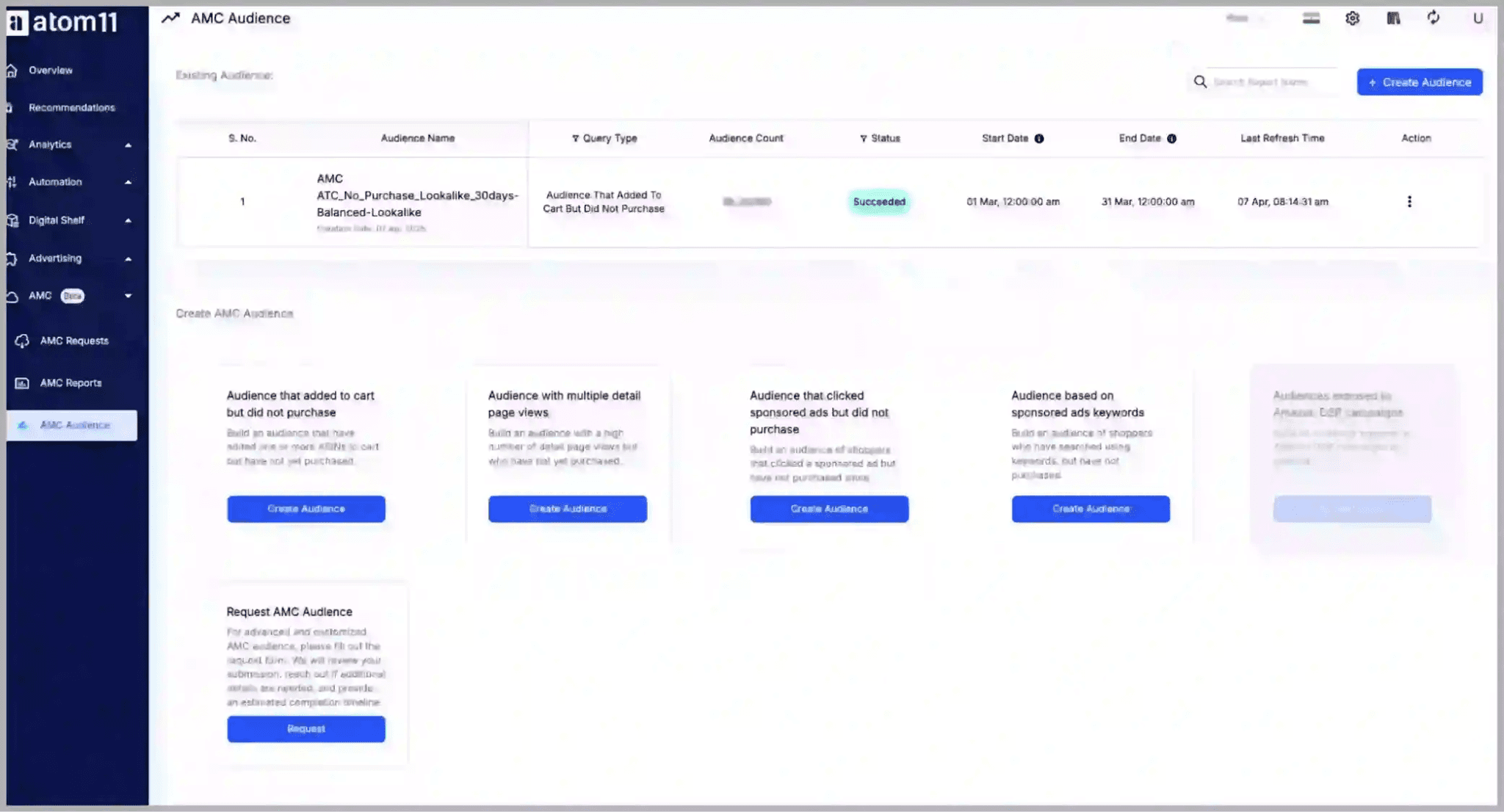
Amazon Marketing Cloud is one of the most powerful tools available for understanding how a client's full ad mix contributes to their Amazon business results. For agencies, it is also one of the most underused, because most Amazon PPC platforms either do not provide AMC access at all or restrict it to enterprise-tier accounts that require SQL expertise to operate.
What agencies can deliver to clients with proper AMC access:
Multi-touch attribution: Understanding how Sponsored Brands and Sponsored Display ads contribute to conversions that Sponsored Products closes, rather than giving all credit to the last click.
Path to purchase and time to purchase data: Concrete evidence for budget allocation recommendations across ad types, showing clients how many touchpoints a conversion typically requires and how long the consideration window is.
Behavior-based audience segments: Cart abandoners, lapsed purchasers, and competitor product page visitors built into retargeting audiences without SQL expertise or a dedicated data team.
Pre-built report templates: Standardized AMC reports that agencies can run across client accounts without rebuilding query logic from scratch for each one.
For agencies evaluating which Amazon advertising optimization platform to build their operation around, AMC access that works at scale without SQL requirements is a meaningful differentiator.
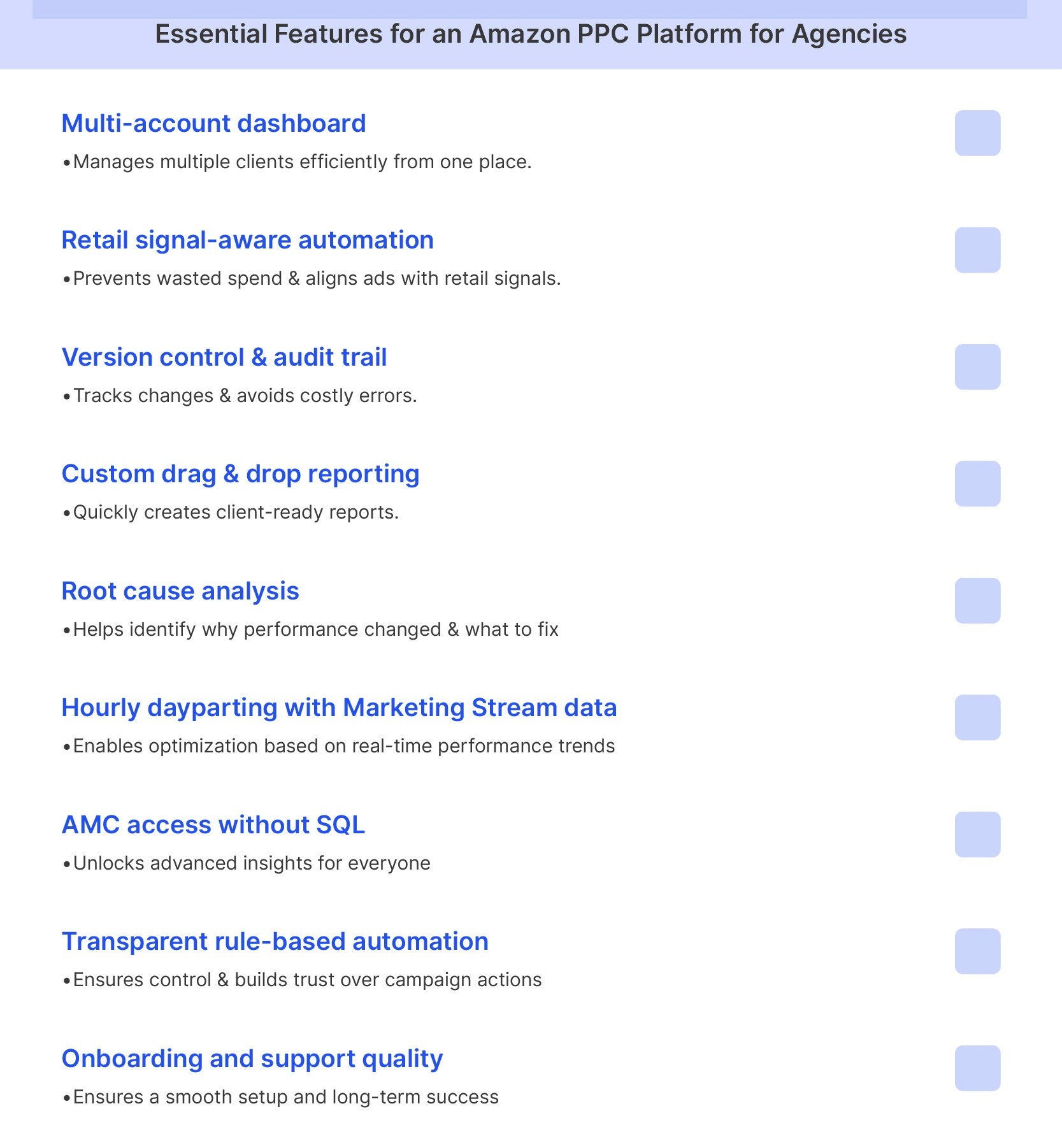
Why do Agencies Choose atom11?
atom11 is an amazon ppc platform for agencies built around the principle that advertising decisions should reflect retail reality, not just ad console data.
At the same time, the platform maintains strong ease of use, allowing teams to manage multiple accounts without operational complexity.
For agencies evaluating Amazon PPC automation software, atom11 offers the depth of an enterprise platform without the enterprise overhead. Book a demo to see Amazon PPC automation software built for agency scale in action.
FAQs
What is an Amazon PPC platform for agencies?
An Amazon PPC platform for agencies is software built to manage advertising across multiple client accounts from one interface. Unlike tools made for individual sellers, agency platforms offer multi-account dashboards, bulk campaign actions, client-ready reporting, and automation configured per account. The best platforms also include retail-aware automation and version control to reduce the risk of changes affecting multiple clients.
How do agencies manage multiple Amazon PPC accounts?
Agencies manage multiple accounts using platforms that provide unified portfolio views, bulk actions, and account-level automation. Managing accounts separately inside the ad console becomes inefficient as client numbers grow. The right Amazon PPC management software removes constant account switching and helps teams focus on campaign optimization.
What is the difference between Amazon PPC tools and agency platforms?
Standard Amazon PPC tools are designed for a single advertiser managing one account. Agency platforms support multi-client workflows with features like cross-account views, audit trails, bulk edits, and client-ready reporting. They allow agencies to apply and track campaign changes across many accounts with different goals and budgets.
How do agencies report Amazon PPC performance to clients?
Agencies using basic Amazon PPC software often export campaign data and rebuild reports manually. Agency platforms simplify this with drag-and-drop reporting that generates client-ready dashboards from live data. Some tools also include compare mode and root cause analysis to explain why performance changed.
Can agencies automate Amazon PPC campaigns across clients?
Yes, but automation quality varies. Basic PPC automation adjusts bids based on ad metrics such as ACoS or conversion rate. Retail-aware automation also factors in inventory levels, Buy Box status, and organic rank. This helps agencies avoid overspending on low-stock products or losing the Buy Box.
How does Amazon DSP differ from traditional Amazon PPC solutions for agencies?
Amazon DSP focuses on programmatic display and video advertising across Amazon-owned and external sites, while Amazon PPC manages sponsored ads within Amazon search and product pages. Agencies often use DSP for upper-funnel audience targeting and retargeting, while PPC focuses on capturing high-intent shoppers inside the marketplace.
FAQs
What is an Amazon PPC platform for agencies?
An Amazon PPC platform for agencies is software built to manage advertising across multiple client accounts from one interface. Unlike tools made for individual sellers, agency platforms offer multi-account dashboards, bulk campaign actions, client-ready reporting, and automation configured per account. The best platforms also include retail-aware automation and version control to reduce the risk of changes affecting multiple clients.
How do agencies manage multiple Amazon PPC accounts?
Agencies manage multiple accounts using platforms that provide unified portfolio views, bulk actions, and account-level automation. Managing accounts separately inside the ad console becomes inefficient as client numbers grow. The right Amazon PPC management software removes constant account switching and helps teams focus on campaign optimization.
What is the difference between Amazon PPC tools and agency platforms?
Standard Amazon PPC tools are designed for a single advertiser managing one account. Agency platforms support multi-client workflows with features like cross-account views, audit trails, bulk edits, and client-ready reporting. They allow agencies to apply and track campaign changes across many accounts with different goals and budgets.
How do agencies report Amazon PPC performance to clients?
Agencies using basic Amazon PPC software often export campaign data and rebuild reports manually. Agency platforms simplify this with drag-and-drop reporting that generates client-ready dashboards from live data. Some tools also include compare mode and root cause analysis to explain why performance changed.
Can agencies automate Amazon PPC campaigns across clients?
Yes, but automation quality varies. Basic PPC automation adjusts bids based on ad metrics such as ACoS or conversion rate. Retail-aware automation also factors in inventory levels, Buy Box status, and organic rank. This helps agencies avoid overspending on low-stock products or losing the Buy Box.
