Blog
/
The Ultimate Amazon Advertising Strategy Guide
Amazon Advertising Strategy: The Complete Playbook
Neha Bhuchar
At a certain point in growing your Amazon business, the gap between where you are and where you want to be comes down to one thing: how well your Amazon advertising strategy reflects the reality of your catalog, your stock levels, your pricing, and your competition. Rising CPCs and increasingly sophisticated competitors mean that running ad campaigns without a coherent strategy is not a neutral decision. It is an expensive one.
Amazon advertising has matured significantly. The sellers and brands winning market share today are not just running more ad campaigns. They are connecting their advertising decisions to retail signals, optimizing across the full funnel from awareness to purchase, and using automation to execute at a speed and precision that manual Amazon PPC management simply cannot match.
This guide covers the full spectrum of Amazon marketing strategy, from the foundational prerequisites that determine whether your ads can convert at all, to advanced tactics like dayparting, search term isolation, defensive and offensive targeting, and Amazon Marketing Cloud.
What Are the Prerequisites for a Strong Amazon Advertising Strategy?
No Amazon advertising strategy can succeed if retail fundamentals are weak. Before scaling ad spend, two things need to be locked in: your product's ability to convert paid traffic and your operational readiness to fulfill the demand your campaigns will generate.
Retail Readiness
Before allocating meaningful ad spend, your product needs:
Reviews: Enough social proof to convert cold traffic.
Inventory levels: Sufficient stock to handle the sales velocity that good ad campaigns will generate.
Buy box eligibility: If you are not winning the buy box, your sponsored products are not showing.
Prime eligibility: Amazon shoppers filter by Prime by default. FBA or Seller Fulfilled Prime is required to convert paid traffic efficiently.
Retail readiness is the foundation that every other element of your Amazon ad strategy is built on.
Listing Optimization
Your ad click is only as valuable as what your listing can close. Before scaling Amazon PPC campaigns, make sure your listing has:
Title: Keyword-rich and structured around the primary search terms shoppers actually use.
A+ content: Visual content that answers buyer objections and communicates differentiation. This is your conversion rate infrastructure.
Images: High-quality and optimized for mobile and desktop, including lifestyle shots that help shoppers picture the product in use.
Backend terms: Completed thoroughly so your Amazon listings capture relevant search terms that do not fit naturally in visible copy.
Amazon sellers who invest in listing optimization before scaling ad spend consistently see lower advertising cost of sales and better total sales efficiency than those who treat it as secondary. Getting this right means your organic and paid visibility compound rather than compete.
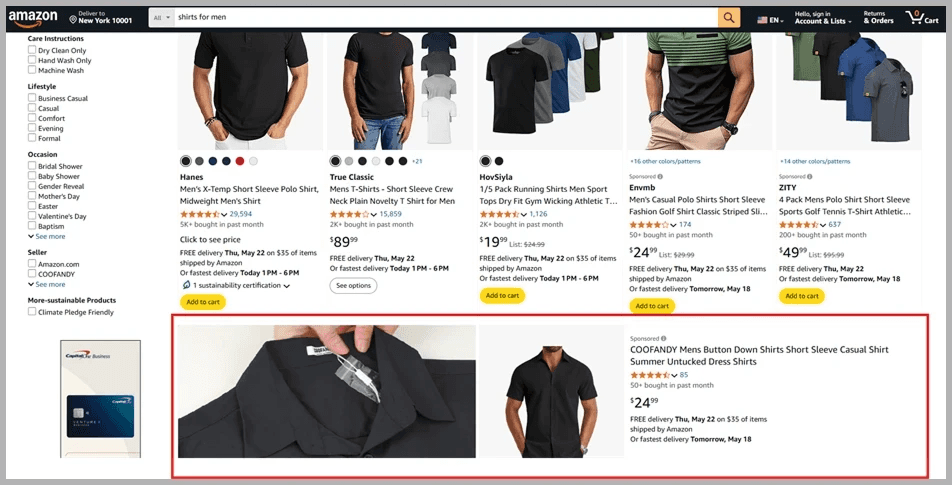
Which Amazon Ad Types Should You Use and When?
A strong Amazon-sponsored ads strategy does not spread budget evenly across every ad format. It allocates spend based on where each ad type sits in the buying journey and what it is designed to accomplish.
Sponsored Products: The Workhorse of Amazon PPC
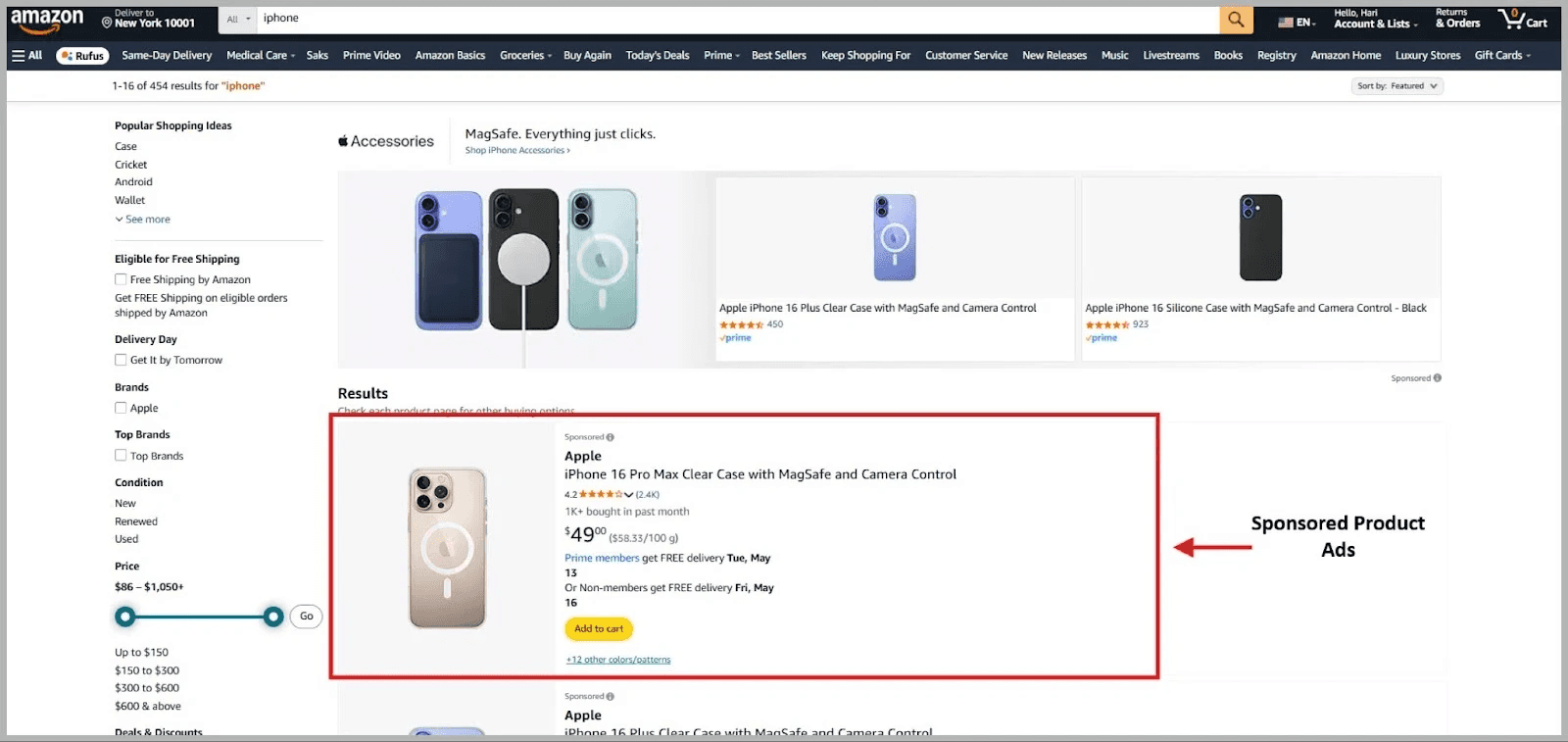
Sponsored products appear directly in Amazon search results and on product detail pages, making them the most direct path from keyword to purchase. For most sellers, the majority of ad spend belongs here because they generate the highest conversion rates of any ad format. atom11's amazon sponsored ads tool applies rule-based bid and budget controls across SP, SB, and SD campaigns without switching between consoles.
Use them to defend your own branded search terms, attack high-intent competitor keywords, and scale top-performing ASINs. They form the core of any Amazon PPC strategy because they are the most measurable, most controllable, and most directly tied to purchase intent.
Sponsored Brands and Video Ads
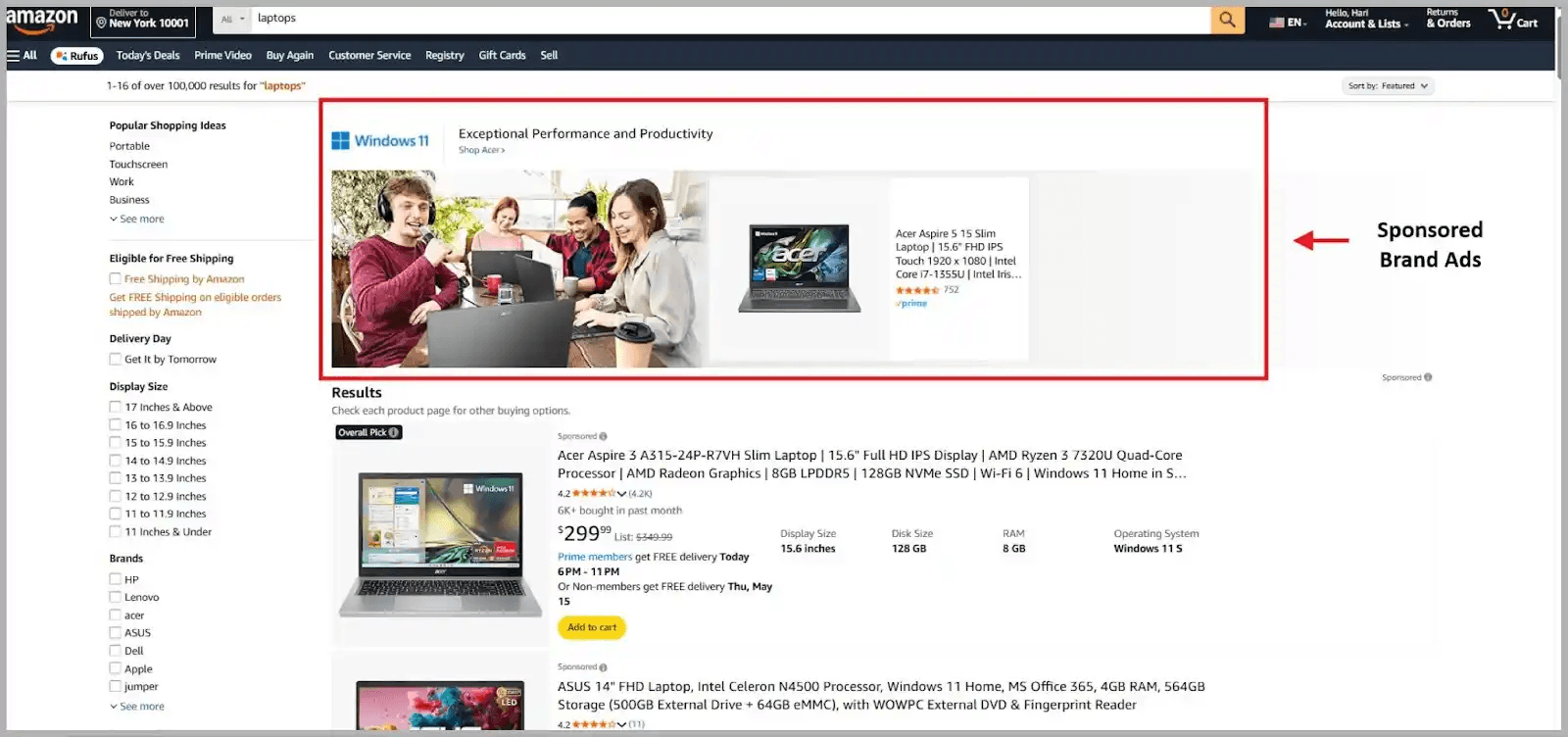
Sponsored brands and brand video ads operate at the top of search results and serve a different purpose: brand awareness and category presence. They are particularly effective for capturing shoppers who are browsing rather than searching for a specific product. Video ads perform well when your product has a clear use case that can be communicated in under 30 seconds. They tend to generate strong click-through rates and drive brand visibility in categories where static image ads have become commoditized. For sellers building long-term brand equity on Amazon, these formats belong in any serious Amazon advertising strategy.
Sponsored Display Ads: Retargeting and Competitive Conquest
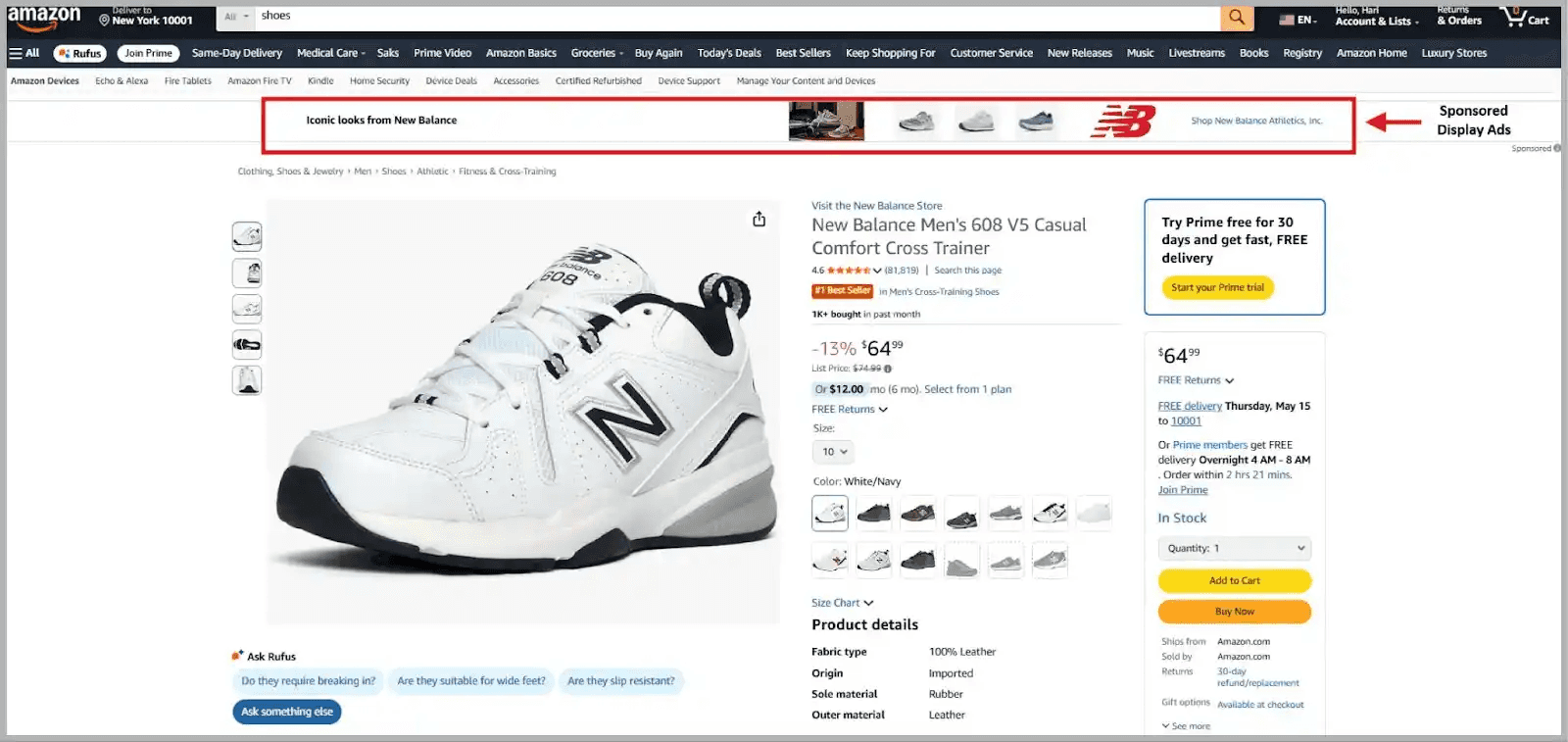
Sponsored display ads are the retargeting and competitive conquest layer of your Amazon marketing strategy. They appear on product pages, allowing you to intercept shoppers who are actively considering a competitor's product, and re-engage shoppers who viewed your listing but did not purchase. For brands with meaningful catalog depth, sponsored display is one of the most underused tools for cross-selling, defending product pages from competitor ads, and capturing shoppers at the decision stage of the buying journey.
Advanced Strategy 1: The Retail-Aware Approach to Amazon Advertising
This is where most Amazon advertising strategies fall short. Standard campaign management treats advertising as an isolated channel. A retail-aware approach treats it as one part of a connected system where inventory levels, pricing, buy box status, and organic search rank all influence how and where you should be spending.
Inventory-Driven Bidding
Running ad campaigns against low or depleted inventory is one of the most common sources of wasted ad spend on Amazon. When stock drops below a safe threshold:
Conversion rates decline as shoppers encounter extended delivery windows or out-of-stock messages.
Continuing to bid aggressively drives up your advertising cost of sales without generating proportional revenue.
Campaign performance metrics deteriorate in ways that take time to recover from, even after stock is replenished.
The right approach is to automatically down-bid or pause ad campaigns when inventory levels fall below a defined threshold, protecting both your remaining stock and your campaign performance metrics. atom11's inventory optimizer handles this automatically, keeping your ad spend concentrated on products that can convert and ship.
Cannibalization Defense
If you already rank in the top three organic positions for a keyword in Amazon search results, bidding aggressively on sponsored products for that same term often means paying for traffic you would have received for free. This is PPC cannibalization, and it quietly inflates total advertising cost without adding incremental revenue. To defend against it:
Monitor your organic search rank at the keyword level regularly.
Apply automation rules that reduce bids as your organic position strengthens.
Use atom11's search rank optimizer to adjust bids based on organic rank performance automatically, so you avoid paying for positions you already own.
Profit-Based Scaling: Why TACoS Matters More Than ACoS
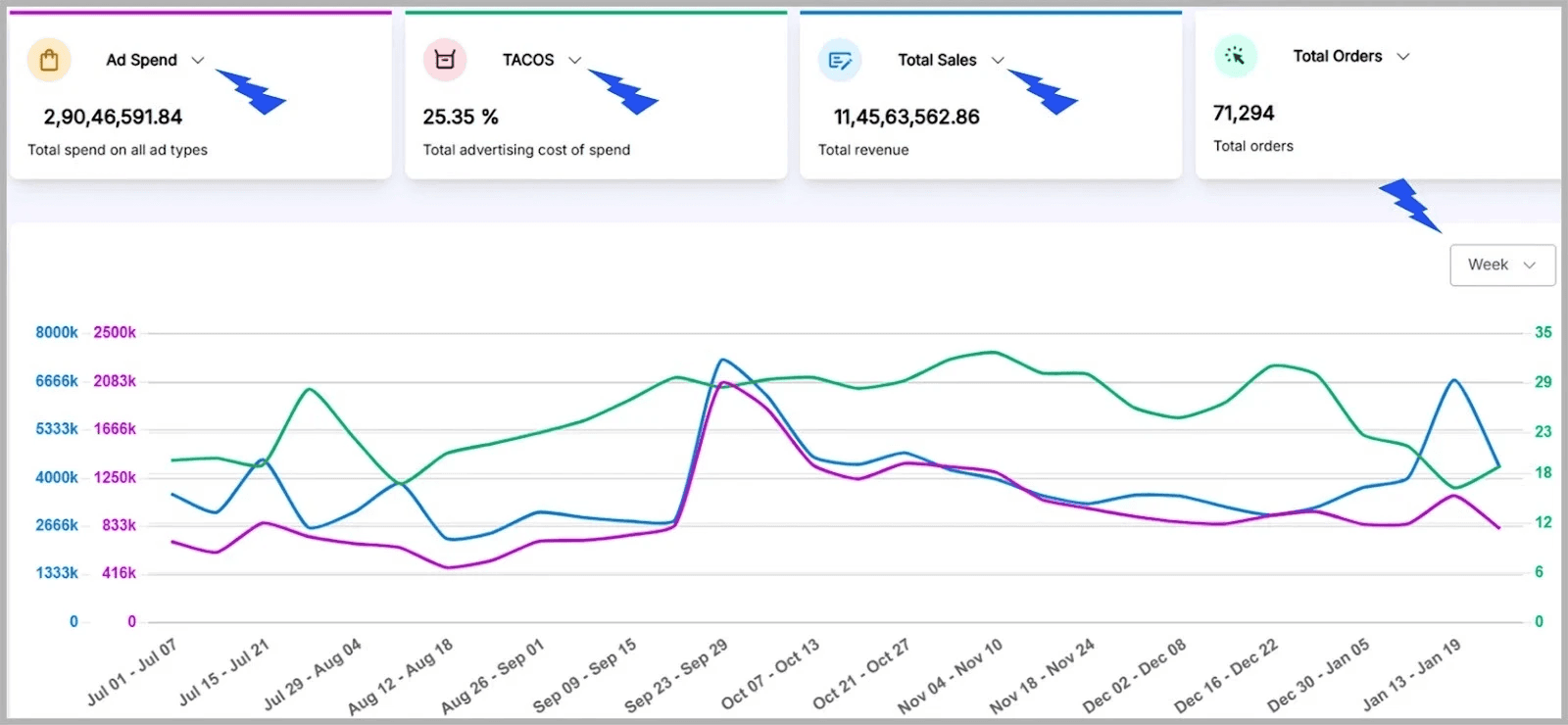
ACoS measures the advertising cost of your paid campaigns relative to ad-attributed revenue. It tells you how efficient your ads are. TACoS measures ad spend against total revenue, including organic sales. It tells you whether your ads are growing your business or simply redistributing sales from organic to paid:
A rising ACoS alongside a falling TACoS usually signals that your campaigns are working and building organic momentum.
A rising TACoS with a flat ACoS is a warning that your ads are replacing organic sales rather than adding to them.
Optimizing for profit margin rather than ACoS in isolation is what separates a sustainable Amazon advertising strategy from one that scales spend without scaling returns.
| Also Read: ACoS vs TACoS: Understanding Amazon Advertising Metrics
Advanced Strategy 2: Campaign Management and Continuous Optimization
The difference between a good Amazon PPC strategy and a great one is not the initial setup. It is the ongoing discipline of refining campaign structures, isolating your best search terms, and allocating budget where it is actually working.
Search Term Isolation: The Peel and Stick Method
The peel-and-stick method is one of the most effective structural frameworks in Amazon PPC strategy. Here is how it works:
Discover: Auto and broad match campaigns act as discovery engines, surfacing converting search terms from real shopper behavior via your search term report.
Peel: Those converting terms are moved into dedicated exact match campaigns where bids are controlled precisely, and more budget can be allocated.
Stick: The original discovery campaign has those terms negated, so each query is served by the most appropriate campaign.
Repeat: The keyword list continuously self-improves, with your highest-converting relevant search terms getting the most competitive bids in your account.
atom11's search term harvester automates this process, identifying performing terms and adding them to the right campaigns, while the search term negator removes underperformers. The manual overhead of reviewing your search term report weekly is replaced by rules that run continuously.
Placement Optimization and Bid Multipliers
Amazon allows bid multipliers across three ad placements. Most sellers apply blanket multipliers without analyzing which placement is actually delivering their target conversion rate. The right approach is to pull placement-level data and set multipliers based on where each placement generates profitable performance:
Top of search: Tends to command premium CPCs but delivers disproportionately strong conversion rates for high-intent keywords.
Product pages: Often better for competitive conquest at lower cost than top of search.
Rest of search: Frequently the weakest performer, where multipliers can often be reduced without a meaningful impact on total sales.
Treating all ad placements equally leaves profitable real estate unoptimized.
Proactive Negative Keyword Sculpting
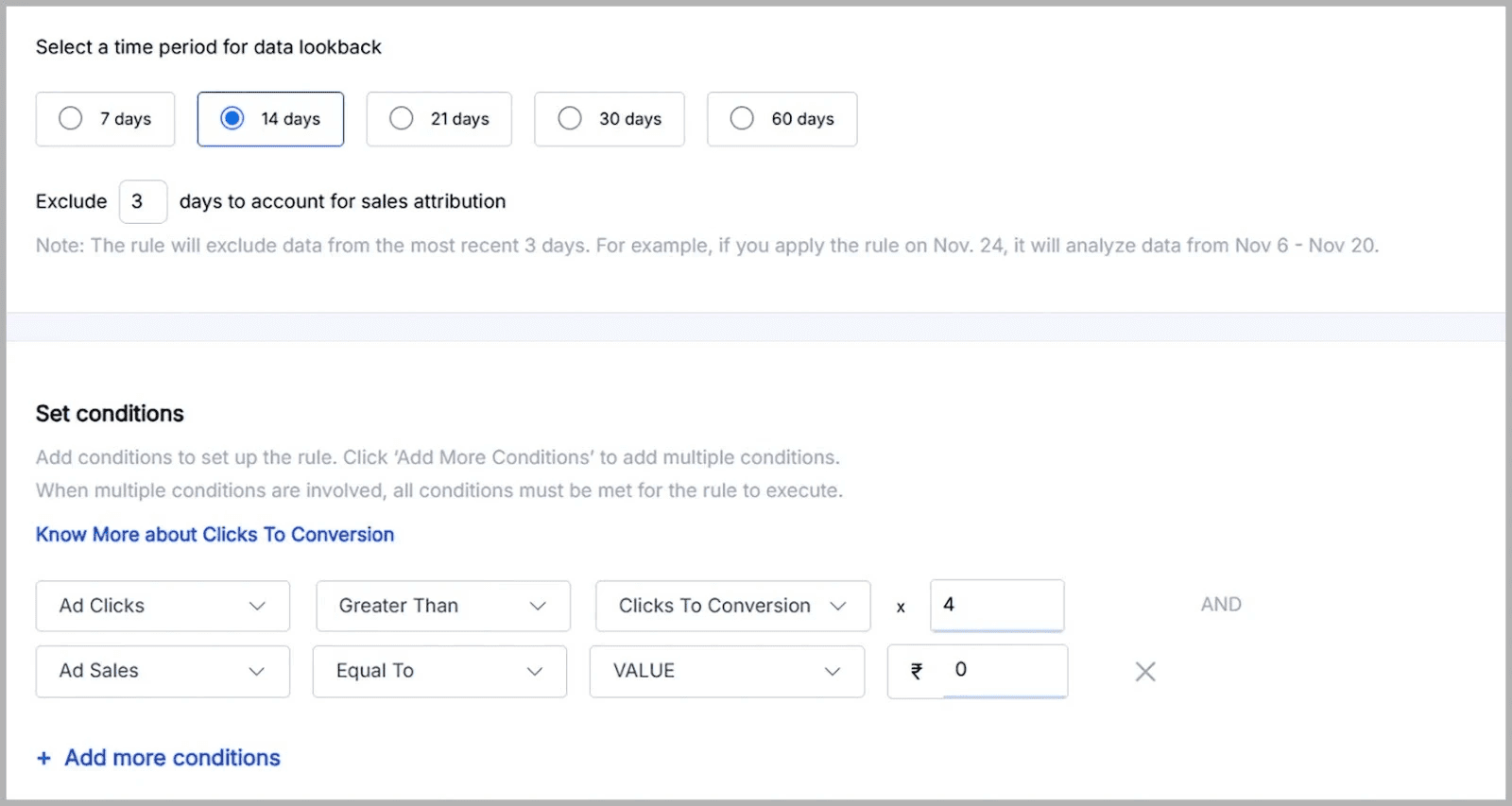
Most sellers negate keywords reactively, after the budget has already been burned on irrelevant clicks. A more efficient approach is to sculpt your campaigns proactively using negative exact and phrase match lists built from keyword research before campaigns go live:
Add terms associated with incompatible use cases, price tiers, or product categories as negative keywords from day one.
Continue feeding the list from your search term report on an ongoing basis.
This prevents budget bleed, lifts your campaign's overall click-through rate, and keeps your campaign performance metrics clean from the start.
Dynamic Budget Allocation
Static daily budgets treat your top-converting exact match campaigns the same as your exploratory auto campaigns. Instead:
Review campaign performance regularly and identify which campaigns are hitting their daily budget cap while generating strong returns.
Shift budget toward those top performers so they never run out of budget mid-day during peak shopping hours.
Constrain exploratory campaigns with high ad spend and low conversion rates until they earn more budget.
Treating budget allocation as a dynamic decision rather than a fixed setting is one of the highest-leverage adjustments most sellers can make inside their campaign manager.
Advanced Strategy 3: How Does Dayparting Improve Amazon Advertising Performance?

The Problem with 24/7 Bidding
Amazon ad campaigns run around the clock by default, but shopper behavior is not evenly distributed across the day. Running flat bids across all hours means you are paying the same CPC for very different quality of traffic:
Clicks at 2 AM from low-intent browsers convert at a fraction of the rate of clicks at 7 PM from shoppers actively ready to purchase.
Budget that drains during low-conversion overnight hours is a budget that is unavailable during your peak conversion windows.
Your advertising cost of sales is inflated by impressions and clicks that would never have converted, regardless of bid level.
Using Amazon Marketing Stream Data to Daypart Effectively
Amazon Marketing Stream provides near-real-time hourly performance data that makes precise dayparting possible. By analyzing conversion rate and CPC patterns by hour across your ad campaigns, you can identify your peak windows and your dead hours. Bids can then be suppressed during low-performing time blocks and increased during high-converting ones.
atom11's dayparting automation uses Amazon Marketing Stream data to build these schedules at both the bid and budget levels, applying different rules per campaign or portfolio. The complete rule set and setup flow live on the amazon dayparting software page. The evaluate feature measures the before-and-after impact of each dayparting setup so you have clear evidence of what the change delivered.
| Also Read: Amazon PPC Dayparting Guide: How It Works + When to Use
Advanced Strategy 4: Full-Funnel Dominance with Amazon Marketing Cloud
What Is Amazon Marketing Cloud?
Amazon Marketing Cloud is a privacy-safe cloud environment that lets advertisers run custom queries across their Amazon ad campaigns and purchase data to understand the complete customer journey. Unlike standard campaign reporting, which attributes a sale to the last ad clicked, Amazon Marketing Cloud shows:
How multiple ad touchpoints work together across the path to purchase.
How many days it typically takes a shopper to convert after a first ad exposure.
Which combinations of ad types drive the highest conversion rate at each stage of the buying journey.
Visualizing the Path to Purchase
A shopper might see a sponsored display ad on Monday, search your category on Wednesday, click a sponsored product, then return directly and purchase on Thursday. Standard reporting credits the sponsored product click and ignores the display interaction entirely.
Amazon Marketing Cloud captures the full sequence, giving you an accurate picture of how your ad campaigns contribute to total sales across every stage of the buying journey. This multi-touch attribution view is what separates a sophisticated Amazon marketing strategy from one that optimizes against incomplete data.
Building Custom Audiences from AMC Data
Amazon Marketing Cloud data can be used to build audience segments that are not available through standard Amazon targeting:
Cart abandoners: Shoppers who added your product but did not purchase, ready for immediate retargeting.
Repeat purchasers: High-value customers are worth investing in for retention campaigns.
Video engagers: Shoppers who watched your brand's video ad but did not convert.
Recent category buyers: Shoppers who purchased in your category within a defined window.
These audiences feed directly into sponsored display and Amazon DSP campaigns. atom11's AMC suite provides one-click no-SQL access to these capabilities for sellers at any scale, not just enterprise accounts.
Advanced Strategy 5: Defensive and Offensive Amazon Ad Tactics
Playing Defense: Protecting Your Brand and Catalog
Defensive Amazon advertising strategy means bidding on your own branded terms and ASINs before competitors do. Key moves:
Bid on your branded search terms: If a shopper searches for your brand name and a competitor's sponsored product appears above your listing, you are effectively subsidizing a competitor's customer acquisition with your own brand equity.
Run sponsored display on your own ASINs: This keeps the ad placements on your own product detail pages under your control, preventing competitors from placing ads directly on your listings.
Use sponsored brands to own your brand's top of search: Owning the top of search banner for your brand terms is one of the most cost-effective brand visibility investments in Amazon advertising.
Playing Offense: Targeting Competitor ASINs and Product Pages
Offensive tactics use product targeting to place your ads on competitor product detail pages, specifically those where you have a meaningful advantage. The highest-value targets:
Competitor products with lower review ratings: Shoppers on a weak listing are already primed to consider alternatives. A well-placed sponsored display or sponsored products ad can redirect them to your product.
Higher-priced alternatives: If your product delivers comparable quality at a lower price, competitor product pages are the right place to make that case directly to shoppers at the decision stage.
Products with recent negative review spikes: A surge in negative reviews creates a window where competitor conversion rates are depressed and your ads can convert at above-average rates.
Advanced Strategy 6: Automation and Amazon PPC Software
Why Manual Management Fails at Scale
Managing thousands of keywords, bid adjustments, search term reports, and inventory changes manually is not a scalable Amazon advertising strategy. As your catalog grows, the complexity compounds:
A change in inventory levels affects bid efficiency but does not trigger any automated response.
A shift in organic rank changes how aggressively you should bid on a keyword, but you only catch it on your next manual audit.
A competitor repricing below you affects your buy box status and conversion rate before you have had a chance to respond.
Tracking all of these variables manually across hundreds of ASINs and PPC campaigns is the operational ceiling that automation exists to break through. The question is not whether to automate. It is which type of automation actually reflects the full picture of your Amazon business.
Choosing the Right Amazon PPC Software
Not all automation tools approach this problem the same way:
Standard rule-based tools are effective at bid adjustments based on ACoS thresholds, but they are effectively retail-blind. They optimize within the ad channel without accounting for what is happening at the shelf level.
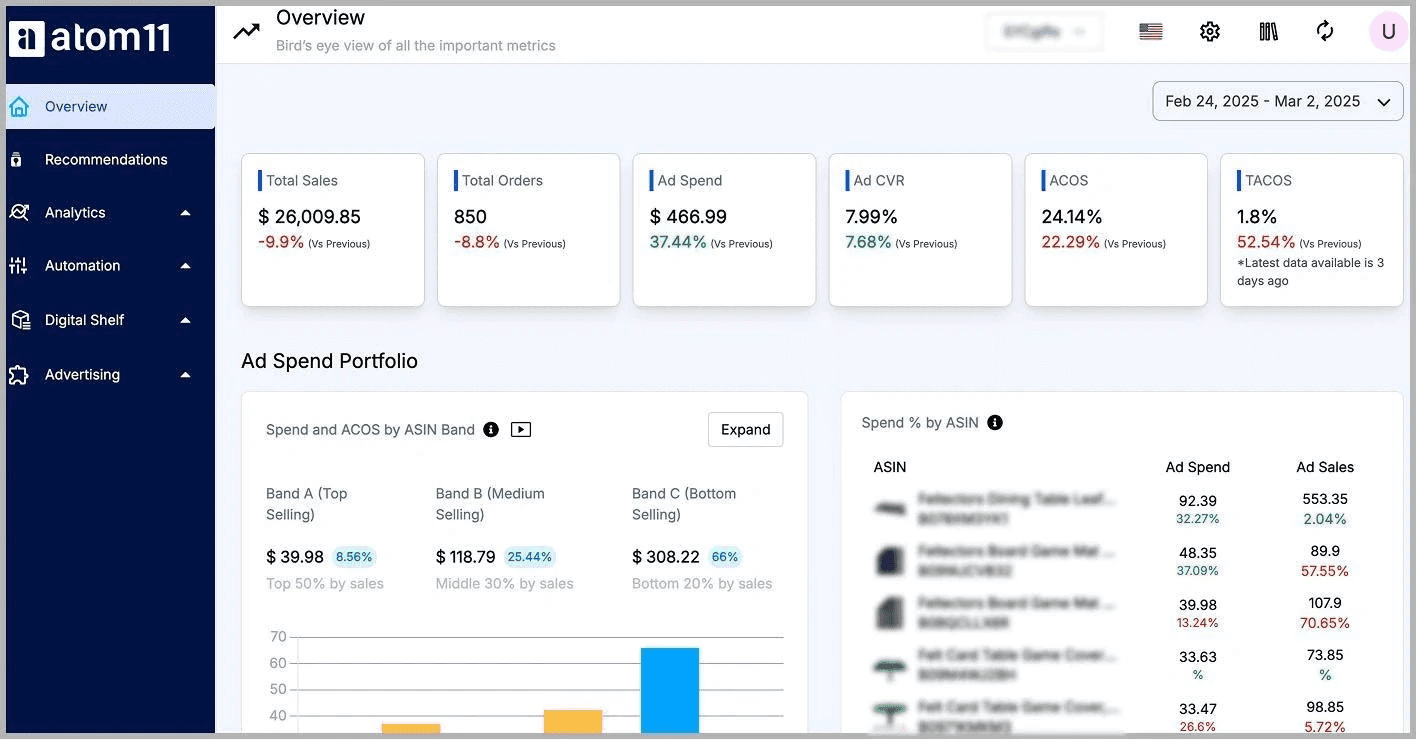
Retail-aware automation, like atom11, connects advertising decisions to live inventory levels, buy box status, organic rank, and competitor pricing simultaneously. If an ASIN loses the buy box, ad spend is automatically pulled back. If a product is approaching a stockout, bids are reduced without manual intervention. If a keyword is being cannibalized by a strong organic position, the bid adjusts accordingly.
Version control allows you to save a snapshot of bids before a major event like Prime Day and restore them in one click afterward, removing one of the highest-risk manual processes in seasonal campaign management.
Conclusion
Running a high-performing Amazon advertising strategy requires more than good keywords and a reasonable budget. It requires retail readiness before you spend a dollar, campaign structures that are continuously self-optimizing, hourly precision through dayparting, full-funnel visibility through Amazon Marketing Cloud, and automation that responds to what is happening at the shelf level, not just inside your ad campaigns.
If your current setup is treating advertising as a standalone channel rather than an integrated part of your retail operation, you are leaving both efficiency and growth on the table.
atom11 combines retail-aware automation, root cause diagnostics, dayparting, AMC access, and version control in one platform built specifically for Amazon sellers and agencies who are ready to move beyond bid optimization. Book a free demo to start your journey with atom11 now.
FAQs
What is an Amazon advertising strategy?
An Amazon advertising strategy is a plan for allocating ad spend across sponsored products, brands, and display to achieve your business goals. A strong strategy goes beyond basic campaign setup by incorporating retail signals (like inventory and organic rank) and full-funnel thinking to maximize total sales.
How do I balance organic and paid strategy on Amazon?
Use paid ads to boost visibility where your organic ranking is weak, and reduce ad spend on terms where you already rank in the top three. Paying for clicks on keywords where you already dominate organically cannibalizes free sales. Regularly monitor your rank and dynamically shift your budget to higher-opportunity terms.
What budget should I set for an Amazon advertising strategy?
A common starting point is allocating 10% to 15% of your target revenue to ad spend, then adjusting based on performance. However, dynamic management is more important than the initial number. Instead of using static daily limits, continuously shift your budget toward top-converting campaigns to maximize returns.
How does Amazon advertising strategy differ from Google Ads strategy?
The core difference is purchase intent: Amazon shoppers are already in a buying environment, leading to much higher conversion rates than Google searchers. Additionally, Amazon strategies must account for unique retail signals, like inventory levels, Buy Box status, and Total ACoS (TACoS), that do not exist in Google Ads.
What metrics matter most in an Amazon advertising strategy?
ACoS (efficiency of paid spend) and TACoS (ad spend vs. total revenue) are your most critical top-level metrics. Beyond those, monitor keyword conversion rates to identify listing issues (like poor pricing or reviews), and track your share of voice and Buy Box win rate to stay competitive.
How should my Amazon advertising strategy change for 2026?
To combat rising ad costs in 2025, you must move beyond basic bidding by adopting AI-driven, retail-aware automation. Success requires leveraging Amazon Marketing Stream for hourly dayparting to cut wasted spend, and Amazon Marketing Cloud (AMC) for full-funnel attribution and smarter targeting.The AMS + AMC stack described above is built into atom11 see the amazon marketing stream tool page for how hourly signals feed the rule engine.
Are there case studies showing successful Amazon advertising strategies?
Yes. Software platforms like atom11 and the official Amazon Ads directory publish numerous success stories. These case studies highlight how brands transition from manual management to retail-aware automation (using tactics like dayparting and AMC audience targeting) to significantly lower ACoS and boost overall profitability.
FAQs
What is an Amazon advertising strategy?
An Amazon advertising strategy is a plan for allocating ad spend across sponsored products, brands, and display to achieve your business goals. A strong strategy goes beyond basic campaign setup by incorporating retail signals (like inventory and organic rank) and full-funnel thinking to maximize total sales.
How do I balance organic and paid strategy on Amazon?
Use paid ads to boost visibility where your organic ranking is weak, and reduce ad spend on terms where you already rank in the top three. Paying for clicks on keywords where you already dominate organically cannibalizes free sales. Regularly monitor your rank and dynamically shift your budget to higher-opportunity terms.
What budget should I set for an Amazon advertising strategy?
A common starting point is allocating 10% to 15% of your target revenue to ad spend, then adjusting based on performance. However, dynamic management is more important than the initial number. Instead of using static daily limits, continuously shift your budget toward top-converting campaigns to maximize returns.
How does Amazon advertising strategy differ from Google Ads strategy?
The core difference is purchase intent: Amazon shoppers are already in a buying environment, leading to much higher conversion rates than Google searchers. Additionally, Amazon strategies must account for unique retail signals, like inventory levels, Buy Box status, and Total ACoS (TACoS), that do not exist in Google Ads.
What metrics matter most in an Amazon advertising strategy?
ACoS (efficiency of paid spend) and TACoS (ad spend vs. total revenue) are your most critical top-level metrics. Beyond those, monitor keyword conversion rates to identify listing issues (like poor pricing or reviews), and track your share of voice and Buy Box win rate to stay competitive.
